To Shift Or Not To Shift
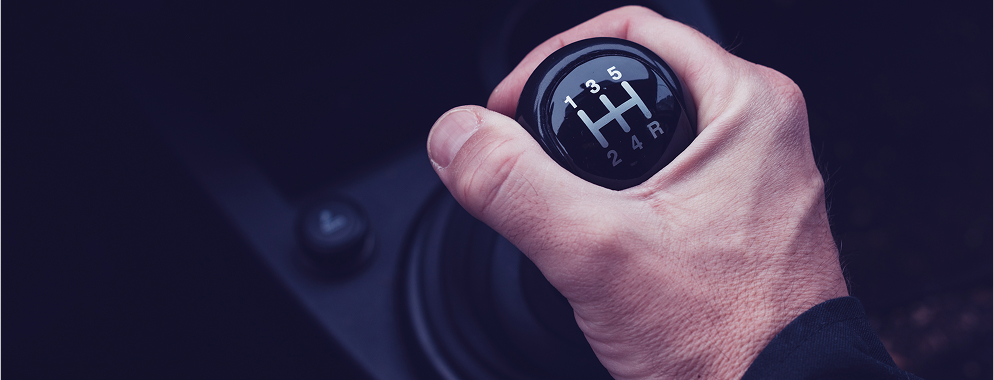
Today’s vehicles offer a wide range of options – from drivetrain configurations like front-wheel and four-wheel drive to power sources like gasoline, hybrid and electric. One of the most important decisions you’ll make when buying a car is choosing the right transmission.
Modern vehicles typically come with either a manual or automatic transmission. In a manual, the driver controls gear changes using a clutch pedal and gear shifter. In an automatic, the vehicle handles shifting for you. So, the question remains: to shift, or not to shift?
Transmission Basics: How Does a Transmission Work?

The transmission is one of the most complex components in your vehicle. Housed in a metal case often referred to as the “gearbox,” it contains a series of gears that transfer power from the engine to the wheels. Its primary job is to ensure the right amount of power reaches the wheels to maintain efficient operation at any speed. Each gear operates within a specific ratio, allowing the engine and wheels to spin at different rates.
When accelerating from a complete stop, the transmission engages a lower gear ratio – delivering more torque and less speed to get the vehicle moving. As speed increases, it shifts to higher gear ratios, maintaining momentum while keeping engine RPMs low for fuel efficiency and smoother performance.
What is a Manual Transmission?
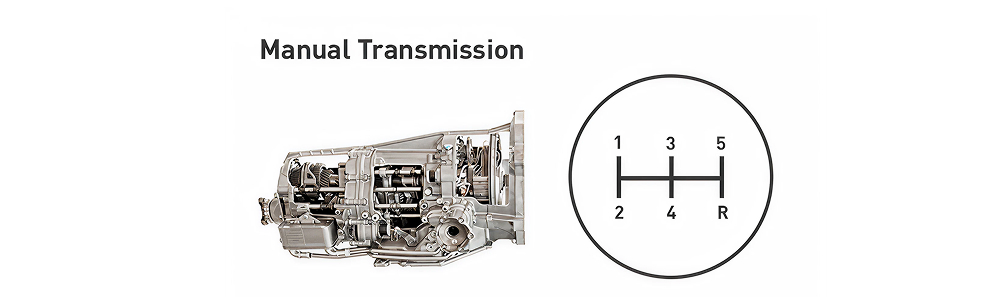
Vehicles equipped with a manual – or standard – transmission are commonly referred to as stick shifts. The driver uses a shift lever, typically located on the center console, to manually change gears while accelerating and decelerating. This lever connects to the transmission via a mechanical linkage.
Vehicles equipped with a manual – or standard – transmission are commonly referred to as stick shifts. The driver uses a shift lever, typically located on the center console, to manually change gears while accelerating and decelerating. This lever connects to the transmission via a mechanical linkage.
To shift gears, the driver presses the clutch pedal, moves the shifter to the desired gear, and then releases the pedal to reengage engine power. Learning to drive a stick takes practice – release the clutch too quickly and the engine may stall; release it too slowly and you risk premature clutch wear. Smooth coordination is key, and with time, it becomes second nature.
Fast facts:
- Requires active driver input – gear selection and shifting are manual.
- Fewer than 2% of new cars sold in the US have a manual transmission.
- Manuals remain popular in India (70%) and are hanging on in Europe (30%).
Pros:
- Lower upfront cost.
- Many drivers enjoy the sense of control.
- Often more fuel efficient.
- Superior acceleration – favored by racecar and performance drivers.
- Typically less expensive to maintain and repair.
Cons:
- Driver must coordinate clutch, gas and gear changes.
- Generally lower resale value.
- Less convenient to in stop-and-go traffic.
- Limited availability in newer models.
What is an Automatic Transmission?
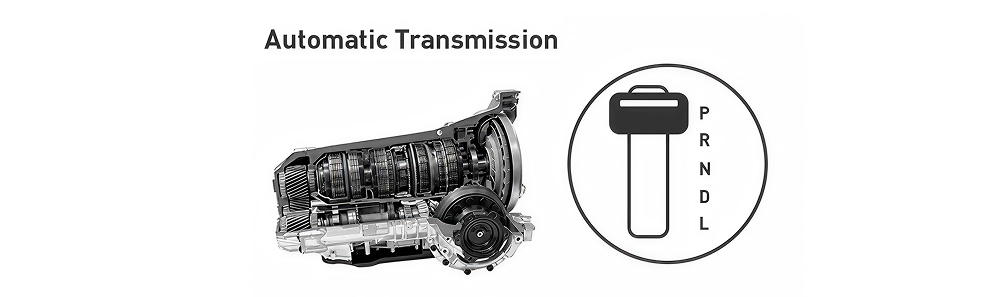
While manual transmissions require active driver input, automatic transmissions simplify the process: the driver selects “D” on the shifter, and the vehicle handles gear changes automatically using fluid pressure. At the core of the system is the planetary gear set, which creates the various gear ratios used during operation.
Automatic transmission fluid (ATF) provides the hydraulic pressure needed to engage bands and clutches that determine gear selection. It also cools, lubricates, and helps transfer power within the transmission.
A torque converter, connected to the drivetrain, performs a similar role to the clutch in a manual transmission. It uses fluid to lock and unlock the planetary gears, enabling seamless gear shifts without driver input.
Fast facts:
- Requires little driver input – just shift to “Drive” and go.
- Dominates the US market – over 98% of the cars sold have automatic transmissions.
- Uses automatic transmission fluid and planetary gear set.
Pros:
- Easy to use – less stress behind the wheel.
- Higher resale value.
- Widely available across makes and models.
- Ideal for stop-and-go traffic.
- Good choice for beginning drivers.
Cons:
- Higher purchase price than manual.
- Repairs can be more expensive.
- Historically less fuel efficient than manuals – but the gap is closing
Which Transmission Should You Choose?
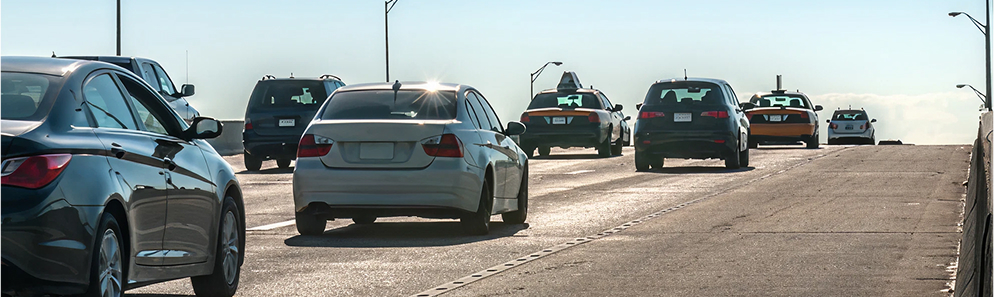
The best transmission for your next vehicle depends on your driving habits and preferences. If you spend a lot of time in city traffic, an automatic can make stop-and-go driving easier and less tiring. On the other hand, if you value performance and enjoy a more hands-on driving experience, a manual transmission might be worth considering. Also think about who else will be driving the vehicle. If they’re not comfortable with a stick shift, an automatic is likely the safer bet.
Learn more about the brands of DRiV, find your car part or find where to buy your auto part today.
The content in this article is for informational purposes only. You should consult with a certified technician or mechanic if you have questions relating to any of the topics covered herein. DRiV and its affiliates (including Federal-Mogul Motorparts LLC) will not be liable for any loss or damage caused by your reliance on any content.


